HENRI
Holographic Engine for Nested Recursive Intelligence
We are engineering the reality of the future with AI, a mission that requires us to dive into the physics of intelligence. To construct HENRI as the ultimate agent of human prosperity, we must seamlessly bridge the gap between abstract mathematical concepts and the physical realities of photonics.
Holographic Reduced Representations
To move beyond the von Neumann bottleneck, we encode knowledge not as discrete tokens, but as continuous Holographic Reduced Representations (HRRs).
Frequency: Provides the orthogonal lexicon (256 distinct wavelengths).
Phase: Acts as the syntactic glue.
Amplitude: Encodes epistemic weight and salience.
.png)
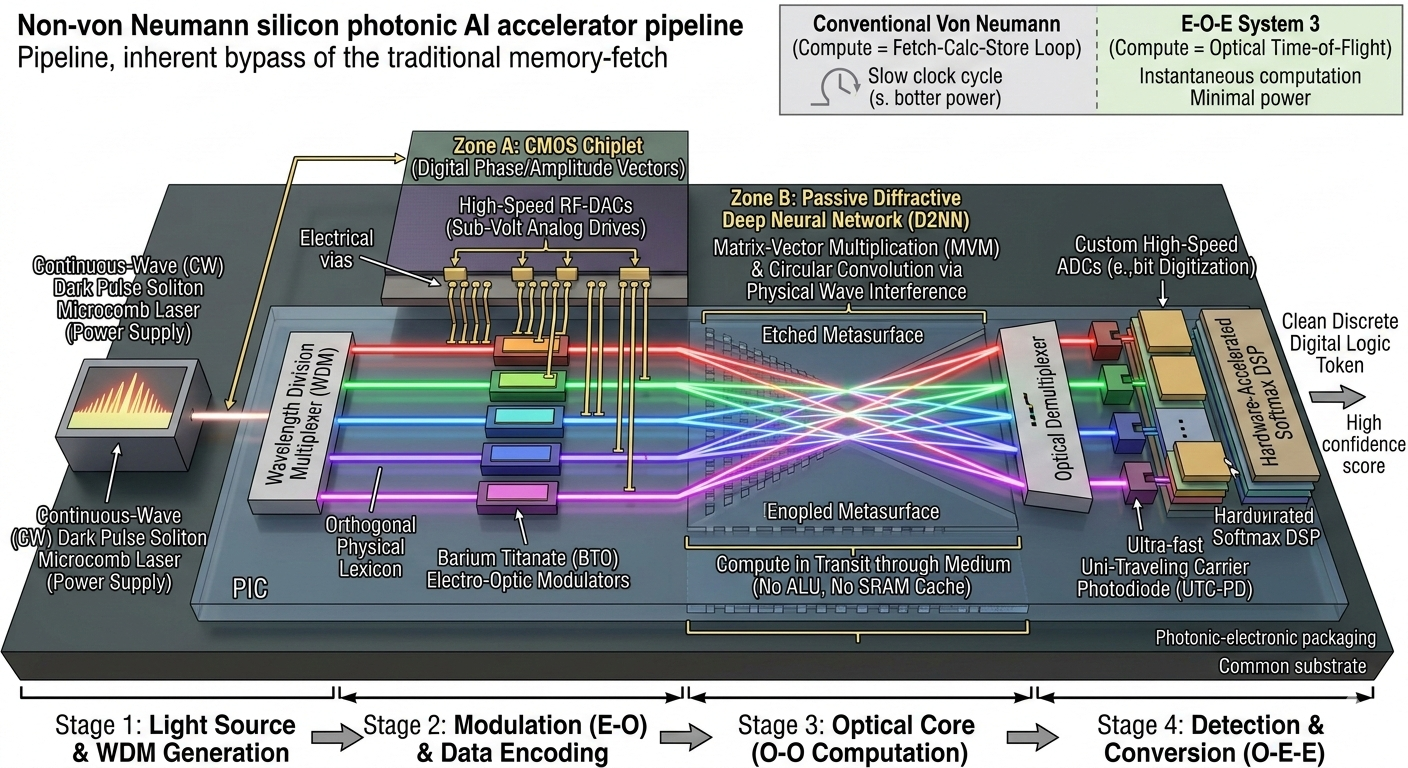
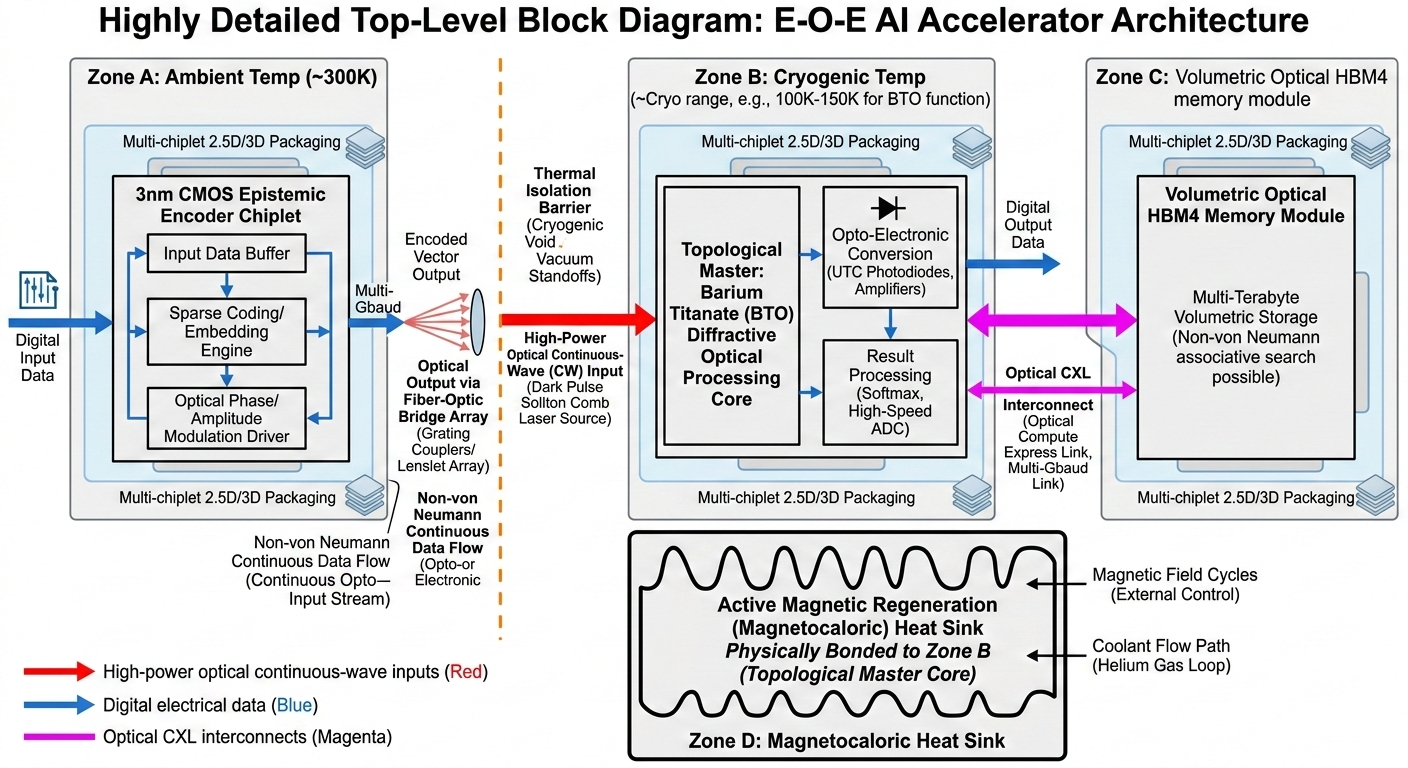
Zone A: The Epistemic Master
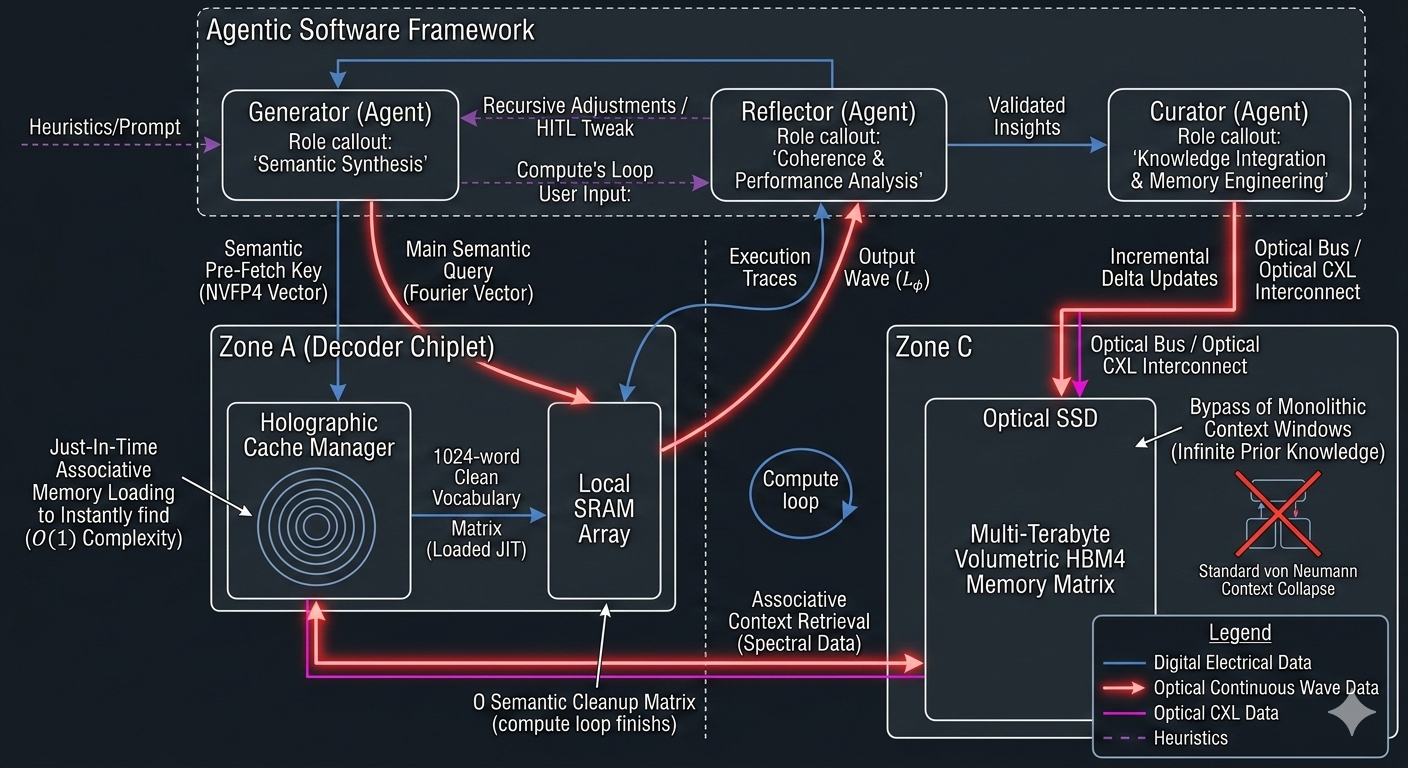
A digital control layer operating at standard semiconductor temperatures. It acts as a "Holographic Projection Head," translating discrete digital semantic intent into the continuous frequency distributions necessary for the passive optical reasoning core.
- Chisel ASIC Layout: Parameterized silicon topologies generating custom logic.
- Fourier Translation Engine: Hardwired IFFT pipeline driving the optics, depreciating power-hungry MAC arrays.
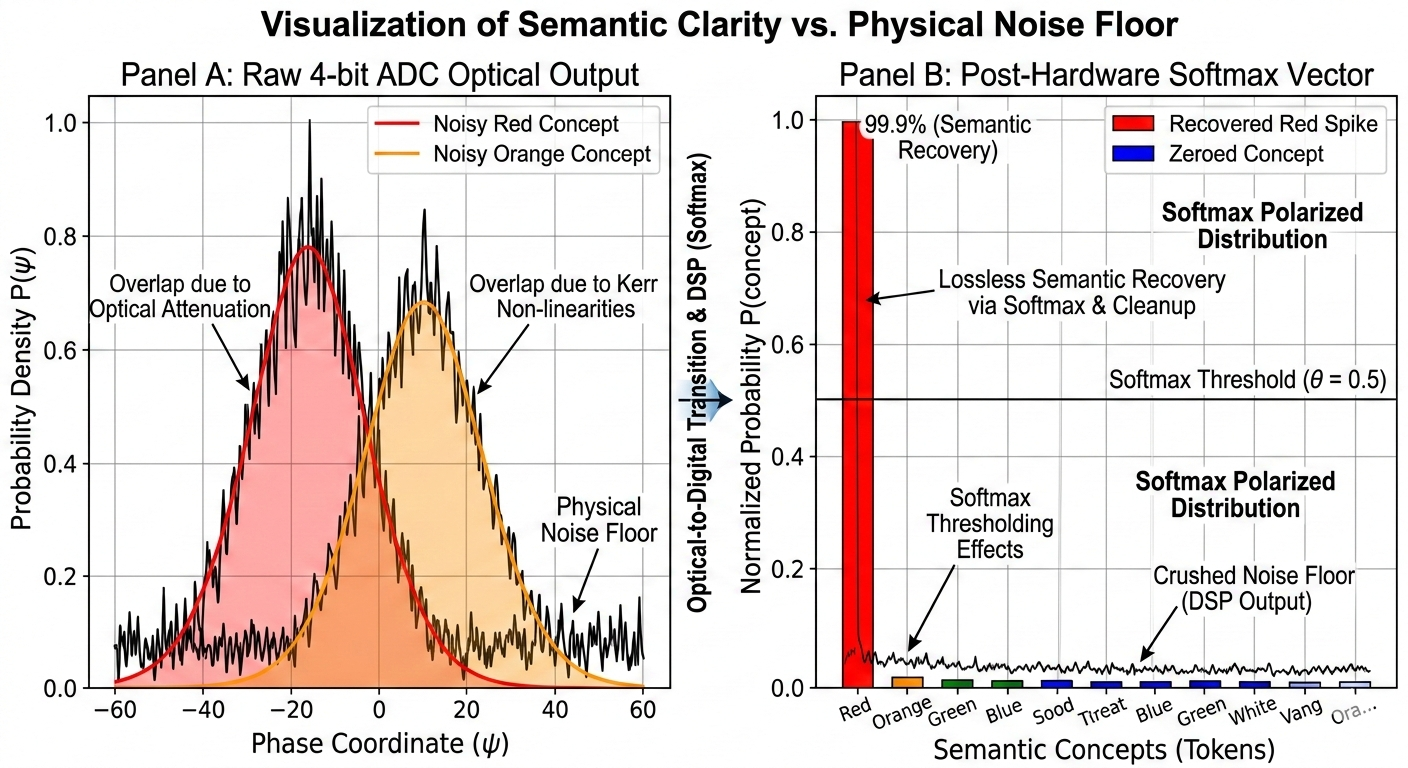
- 1-bit Comprehension ADC: A threshold comparator that isolates the winner of the HRR computation with 90% less power.
Zone B: The Topological Master
The physical analog reasoning core. Here we abandon the discrete shuffling of electrons to harness continuous wave mechanics. Massive parallel vector-matrix multiplications are executed instantaneously through continuous wave interference.
- Barium Titanate (BTO) Core: Operating at the symmetry-breaking phase boundary (~0°C) for extreme electro-optic sensitivity.
- Sagnac Interferometers: Active loops serving as non-linear logic gates, breaking symmetry to compute decisions.
- Thermodynamic Variance: Microheaters inject continuous physical Langevin noise to dislodge "Logic Locks" via Stochastic Resonance.
.png)
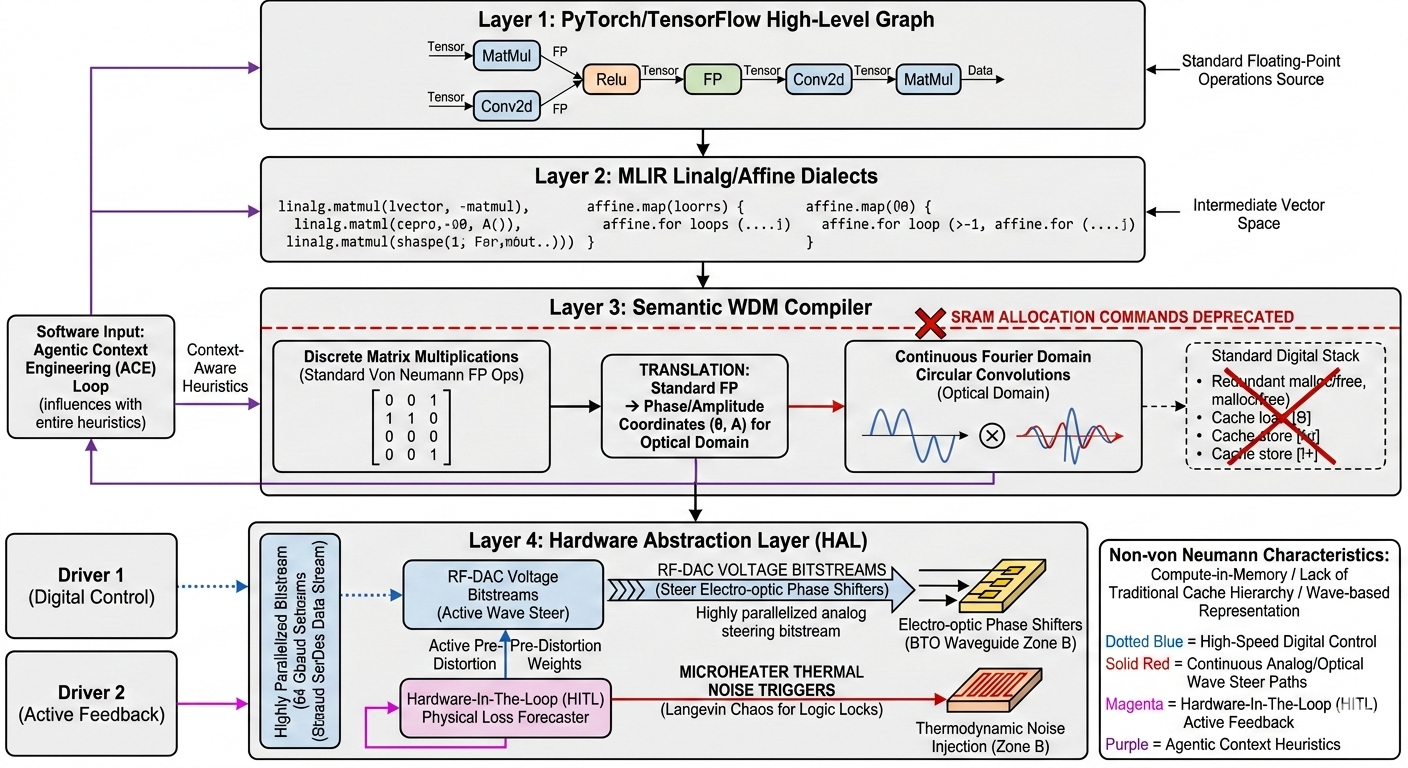
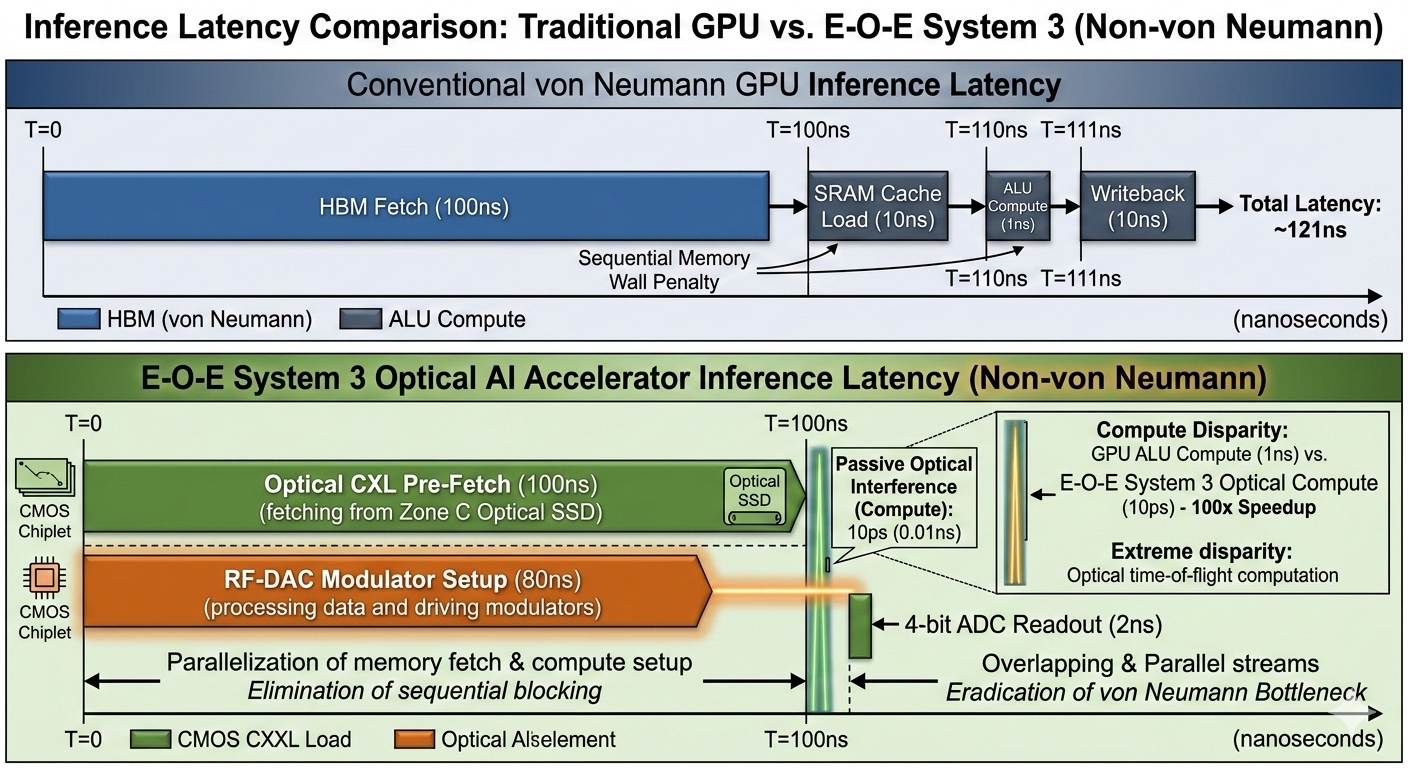
Zone C: The Optical Context SSD
Annihilating the von Neumann Memory Wall. Zone C houses Volumetric High Bandwidth Memory (HBM4) stacks connected via an Optical Compute Express Link (CXL) protocol, moving data at over 10 Terabytes per second.
- Predictive Holographic Hashing: Parallelizes analog computation and memory fetch. Allows for an O(1) associative search complexity.
- Agentic Context Engineering: Bypassing finite LLM context windows, allowing incremental delta updates of infinite, multi-dimensional wave vectors.